What Happens to Your Body and Brain Before Competition (And What to Do About It)
A trembling hand and a pounding heart aren’t signs that you’re unprepared.
The shaky hands, racing heart, and swirling stomach you feel before competing aren’t malfunctions. They are your sympathetic nervous system doing exactly what it evolved to do: preparing your body for a high-stakes effort. This “fight-or-flight” response floods you with adrenaline and cortisol, sharpening your senses and readying your muscles.
The goal isn’t to make it disappear. Athletes who perform best under pressure don’t feel less activated than everyone else, they’ve simply learned to interpret activation as fuel instead of danger, using specific, trainable techniques like reframing, breathing, and routine to direct it.
Introduction
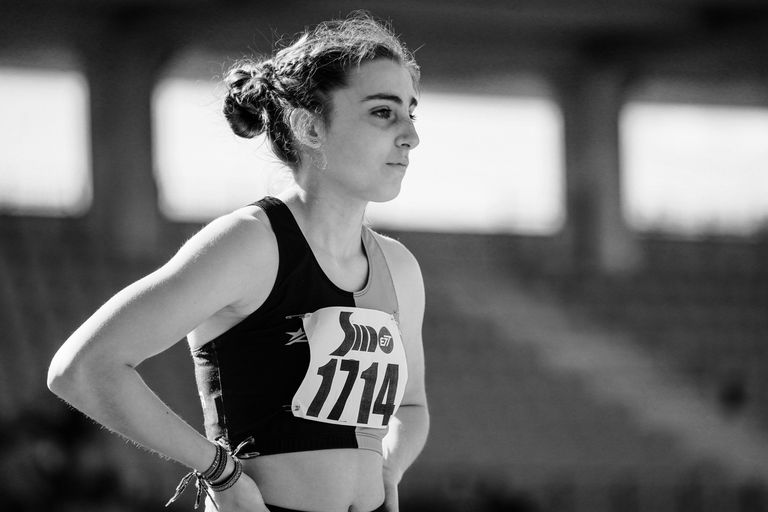
Your hands won’t stop shaking. Your heart feels like it’s trying to escape your chest. Your stomach is doing something you’d rather it didn’t, right before the moment that matters most. It’s easy to read all of this as a verdict: I’m not ready. Something’s wrong with me.
It isn’t a verdict. It’s biology. It’s the same biology every competitive athlete experiences, from beginners to Olympic champions. What separates a shaky performance from a great one usually isn’t the presence of these symptoms. It’s what the athlete does with them.
And it isn’t only physical. The same alarm system that speeds up your heart also speeds up your thoughts, which is why pre-competition nerves so often show up as a racing mind as much as a racing pulse.
This article breaks down exactly what’s happening in your body and brain in the minutes and hours before you compete, why the sensation is so universal, and what the research says actually works to turn that activation into an advantage instead of a liability.
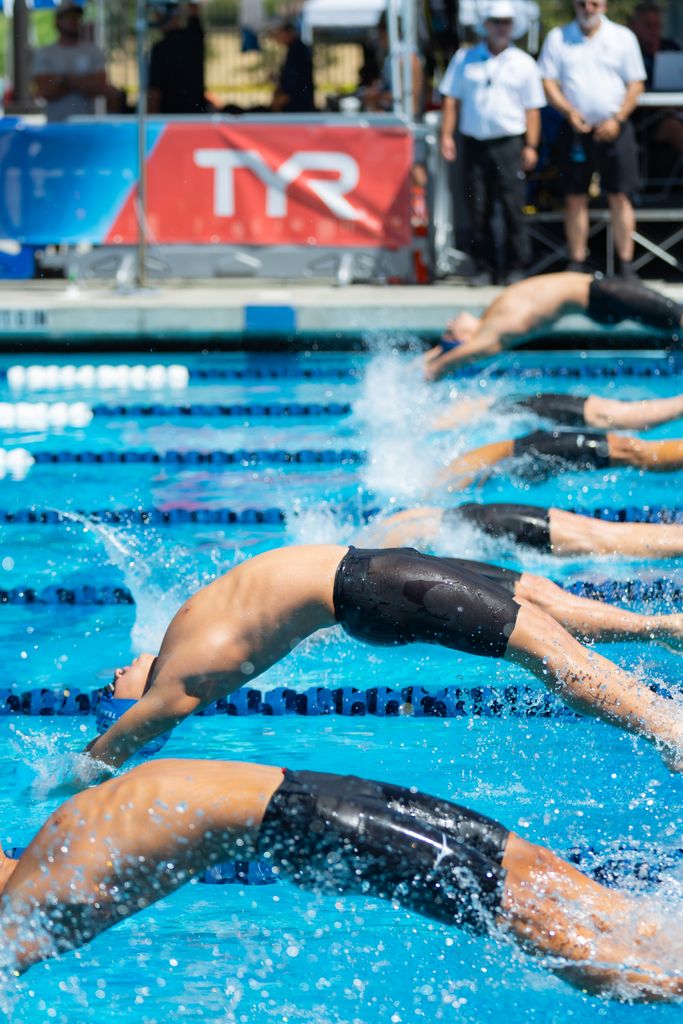
Meet Your Nervous System’s Alarm Button
Every symptom you feel before competing traces back to one system: the sympathetic nervous system, the branch of your nervous system responsible for what’s commonly known as the “fight-or-flight” response. When your brain perceives a high-stakes situation (a final, a big game, a race), it doesn’t distinguish neatly between “physical danger” and “performance pressure.” It reacts the same way it would to any perceived threat: by triggering your adrenal glands to release adrenaline and cortisol into your bloodstream.
That chemical surge produces the specific sensations you recognize. Your heart rate climbs and blood gets redirected toward your muscles. Your breathing quickens to bring in more oxygen. Your senses sharpen. Digestion slows down, which is part of why your stomach feels unsettled or why you suddenly need a bathroom you didn’t need five minutes earlier. None of this is your body failing you. It’s your body doing precisely what it’s built to do before a demanding effort: mobilizing energy and attention as fast as it can.
This system doesn’t wait for the starting whistle, either. Because the trigger is a perceived high-stakes situation rather than the event itself, the response can build for hours beforehand, which is why you can feel your pulse rising over breakfast, or notice your palms getting damp during the warm-up, long before the actual competition begins.
The Three States: Fired Up, Frozen, or Just Right
Not all pre-competition activation is equal, and sport scientists studying this “pre-start” period describe three distinct patterns. The first is a state of balanced readiness (sometimes called “combat readiness”) where the nervous system is activated just enough to sharpen focus and mobilize energy without overwhelming it.
The second is overactivation, or “pre-start fever,” where the same system fires too intensely, leaving an athlete jittery, scattered, or prone to rushing.
The third is underactivation, or “pre-start apathy,” where the system barely engages at all, leaving an athlete flat and unmotivated.
This maps closely onto a well-established idea in performance psychology known as the Yerkes-Dodson law, or the inverted-U theory: performance tends to improve as arousal increases, up to a point, after which more arousal starts to hurt performance instead of helping it. The takeaway isn’t that nervousness is the enemy. Some activation isn’t just tolerable – it’s necessary. The real skill is recognizing which of the three states you’re in, so you know whether you need to dial your activation up, down, or simply direct it.
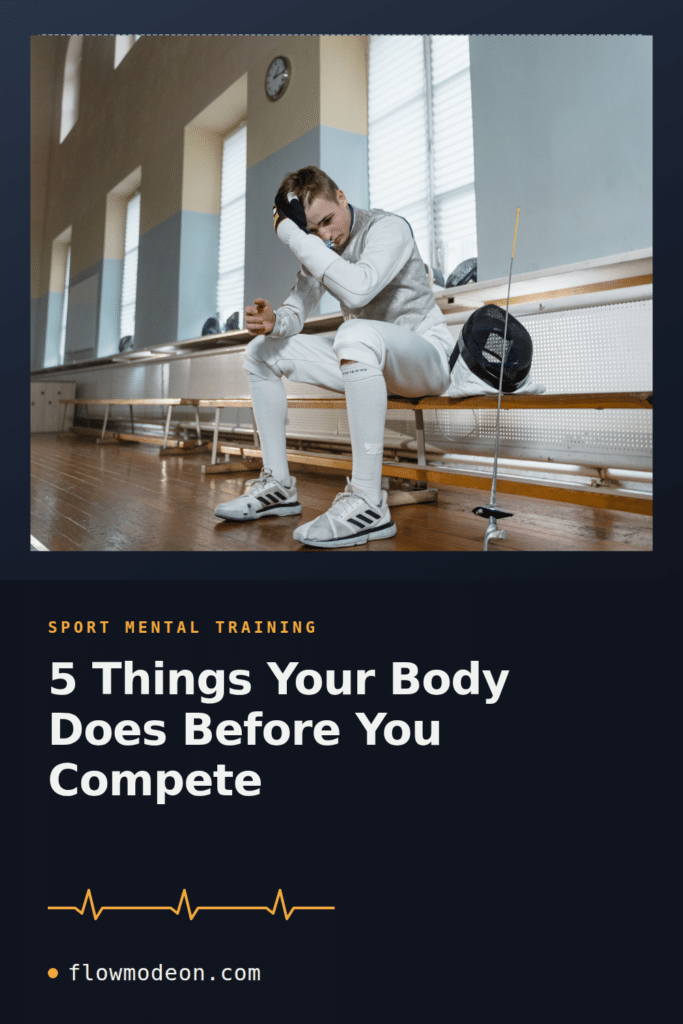
Why Even Elite Athletes Still Feel This
If you’ve ever assumed professional athletes eventually stop feeling nervous, the research says otherwise. Elite competitors regularly report physiological arousal before major competitions that’s just as strong as what less experienced athletes feel – sometimes stronger. The faster heartbeat, the quickened breathing, the sharpened senses: these show up at every level of competition, because they’re generated by the same ancient stress circuitry in every human brain, not by a lack of skill or preparation.
What changes with experience isn’t the intensity of the physical response. It’s the athlete’s relationship to it. Athletes who’ve competed at a high level for years tend to have built a specific, practiced way of interpreting these signals as preparation rather than danger, along with routines that give the activation somewhere useful to go. The sensations don’t go away. The story an athlete tells themselves about the sensations does.
The Surprising Case for a Racing Heart
Here’s a finding that runs against the instinct to see a pounding heart as purely a problem: in a study of elite snowboarders measured before freestyle jumps, higher sympathetic nervous system activation (reflected in elevated heart rate right before competing) was associated with better, not worse, performance in several competitive situations. Related research on military parachute jumping found a similar pattern: a higher heart rate right before the jump was linked to improved motor performance afterward.
This doesn’t mean more nerves are automatically better. The inverted-U principle still applies, and too much activation absolutely can tip into the kind of “choking under pressure” every athlete dreads. But it does mean a racing heart isn’t inherently a red flag. In the right dose, that same physiological state that feels alarming is also the state that sharpens reaction time, increases bodily awareness, and helps coordinate fast, precise movement. Your body may be doing you a favor.
It’s Not Just Your Body – Your Mind Reacts Too
Alongside the physical symptoms, most athletes experience a mental version of the same alarm: racing thoughts, a sudden inability to focus, replaying mistakes that haven’t happened yet, or a harsh inner voice narrating everything that could go wrong. This is often called cognitive anxiety, and it runs on a parallel track to the physical symptoms rather than being caused by them. You can have a lot of one and not much of the other.
Research comparing highly anxious and less anxious competitors found that the more anxious group reported lower self-esteem and leaned more heavily on what researchers describe as dysfunctional coping heading into competition – patterns like avoidance or excessive worry, rather than approaches that actually help manage the pressure. The same research found that competing under this kind of load left the anxious group more mentally fatigued afterward, even when their physical exertion matched that of their less anxious peers. In other words, a racing mind can be just as taxing as a racing heart, and sometimes more so.
This matters because it means “getting your head right” before competition isn’t a vague, feel-good idea. It’s addressing a specific, real layer of the stress response that runs alongside the physical one, which is exactly why the most effective pre-competition strategies work directly on this mental layer, not only on the body.
The One-Word Trick: Reframing Anxiety as Excitement
If the physical sensations of anxiety and excitement are so similar, one Harvard Business School study asked a simple question: does it matter which one you tell yourself you’re feeling? Across several experiments involving public performance tasks, researcher Alison Wood Brooks found that it does, and the answer runs counter to popular intuition.
Most people’s instinct under pre-performance nerves is to try to calm down. Brooks’ research found a different strategy worked better: reappraising the anxiety as excitement instead of trying to eliminate it. Participants who tried a simple, minimal intervention, saying the words “I am excited” out loud before performing, ended up more confident and approached the task with an opportunity mindset rather than a threat mindset, and performed measurably better than participants who tried to talk themselves into calm.
The logic is that anxiety and excitement share nearly identical physiological signatures (the same racing heart, the same alertness), which makes shifting the label far easier than trying to shift the underlying physical state itself.
Key Tips
- Rename it before you try to remove it. Instead of fighting the racing heart, say “I’m excited” out loud. It sounds almost too simple, but research shows this small shift in labeling changes how the moment feels and how you perform in it.
- Build a pre-performance routine you fully control. A consistent sequence, like the same warm-up, the same cues, the same order of actions gives your activated nervous system something predictable to focus on instead of spiraling.
- Use your breath as a dial, not an off-switch. Slow, controlled breathing won’t erase your body’s stress response, but it helps you regulate the intensity so you land closer to “combat readiness” instead of “pre-start fever.”
- Notice which of the three states you’re in. If you feel jittery and scattered, you likely need to bring your activation down slightly. If you feel flat, you may need to bring it up. Naming the state is the first step to adjusting it.
- Catch a racing mind the same way you catch a racing heart. If you notice yourself replaying mistakes that haven’t happened yet, treat it as the same alarm system, just showing up as thoughts instead of symptoms and bring it back with one concrete cue, like a single word or your next specific action.
- Stop treating physical symptoms as proof you’re not ready. A pounding heart, sweaty palms, and a tight stomach show up in beginners and champions alike. Preparation shows up in what you do next, not in whether the symptoms appear at all.
FAQ
Is it bad to feel nervous before competing?
No. Some activation of your nervous system actually improves performance, up to a point. The goal isn’t zero nerves, it’s the right amount, directed well.
Why do I still get nervous even when I know I’m prepared?
Because the response isn’t triggered by your skill level, but by how high-stakes the moment feels to your brain. Even elite, highly prepared athletes report strong physiological arousal before big competitions.
Should I try to calm myself down before I compete?
Not necessarily. Research comparing the two approaches found that reappraising anxiety as excitement worked better than trying to calm down, likely because anxiety and excitement feel physiologically similar, making the label easier to shift than the sensation itself.
What’s the difference between helpful nerves and too much anxiety?
It comes down to intensity and direction. Moderate activation sharpens focus and readies your body; excessive activation scatters attention and tightens muscles in ways that hurt performance. Recognizing which state you’re in is the key skill.
Can breathing exercises really make a difference in the moment?
Yes. Controlled breathing helps regulate the intensity of your sympathetic nervous system’s response, nudging you from an overactivated state toward a more balanced, focused one.
Do elite athletes eventually stop feeling this way?
Not usually. What changes with experience is the relationship to the sensations, not the sensations themselves. More experienced athletes interpret the same racing heart as preparation rather than danger.
My mind races more than my body reacts – is that different from “normal” nerves?
Not different, just a different channel for the same alarm system. Some athletes feel this stress response mostly in their body, others mostly in racing thoughts and self-talk, and many feel both. Either version responds to the same core tools: routine, breathing, and reframing.
Summary
The trembling hands, the pounding heart, the unsettled stomach – none of it is evidence that you’re unprepared. It’s your sympathetic nervous system doing its job, the same job it’s done for every athlete who ever stepped up to a starting line, a free-throw line, or a mat. What separates a performance that falls apart from one that holds together usually isn’t the absence of these signals. It’s whether the athlete has learned to read them as fuel instead of a warning. That is a skill, not a personality trait, so it’s trainable.
Sources
- Tanguy, G., Sagui, E., et al. (2018). Anxiety and Psycho-Physiological Stress Response to Competitive Sport Exercise. Frontiers in Psychology. https://www.frontiersin.org/journals/psychology/articles/10.3389/fpsyg.2018.01469/full
- Romaniuk, V., Fedorchuk, S. (2023). Fight or flight mechanism and sports activities: psychophysiological aspects. PMC. https://pmc.ncbi.nlm.nih.gov/articles/PMC10660604/
- Brooks, A. W. (2014). Get Excited: Reappraising Pre-Performance Anxiety as Excitement. Journal of Experimental Psychology: General, 143(3), 1144–1158. https://pubmed.ncbi.nlm.nih.gov/24364682/
- Matsumura, S., Watanabe, K. et al. (2021). Positive Relationship Between Precompetitive Sympathetic Predominance and Competitive Performance in Elite Extreme Sports Athletes. Frontiers in Sports and Active Living. https://www.ncbi.nlm.nih.gov/pmc/articles/PMC8421024/
- Williams, V. B. (2026). Under Pressure: How Elite Athletes Respond to Stress. Kerlan-Jobe / Vernon Williams, MD. https://www.vernonwilliamsmd.com/blog/2020/september/under-pressure-how-elite-athletes-respond-to-str/
- Stress and Athletic Performance: How It Affects Your Game. (2024). Neurolaunch. https://neurolaunch.com/how-does-stress-affect-athletic-performance/