How do athletes overcome sports performance anxiety on game day? 7 ways to do it
Quick answer
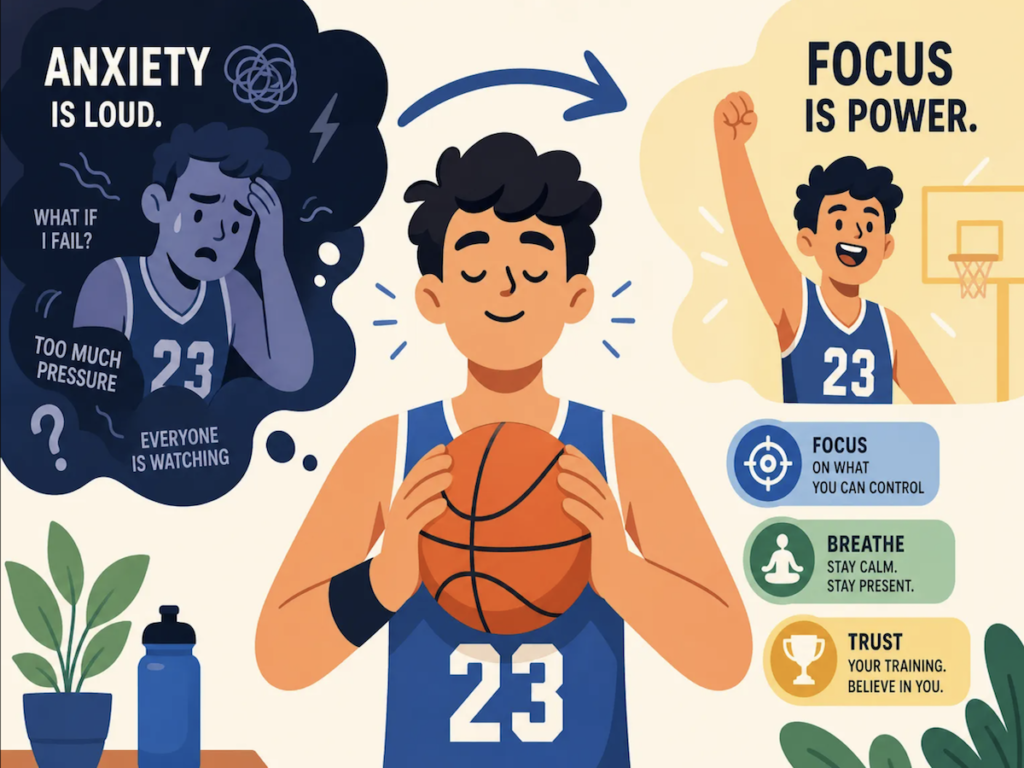
The best way athletes overcome sports performance anxiety is by training the mind the same way they train the body. That means building a reliable pre-game routine, using breathing to control nerves, replacing panic thoughts with useful self-talk, practicing pressure in training, focusing on process instead of outcome, using visualization, and getting support when they need it.
Sports performance anxiety is common, but it does not have to control how you perform. With the right tools, athletes can learn to stay calmer, think more clearly, and compete with more confidence when it matters most.
Introduction
Sports performance anxiety can hit even the most prepared athlete. Have you ever walked into game day feeling physically ready, only to feel your mind tighten, your breathing change, and your confidence drop for no obvious reason?
I know that feeling well. As a professional basketball player, I’ve had moments where I felt 100% prepared and still froze once the pressure showed up. That is exactly why I believe mental training matters just as much as physical training.
The truth is, nerves are normal. But when sports performance anxiety starts affecting your focus, your decision-making, or how freely you play, it stops being “just nerves” and starts becoming something you need to manage properly.
The good news is that you can learn how to handle it. You do not need to become a different person or eliminate all pressure. You just need better tools, a better pre-game routine, and a stronger understanding of how your mind responds when it feels the heat.
What it really is
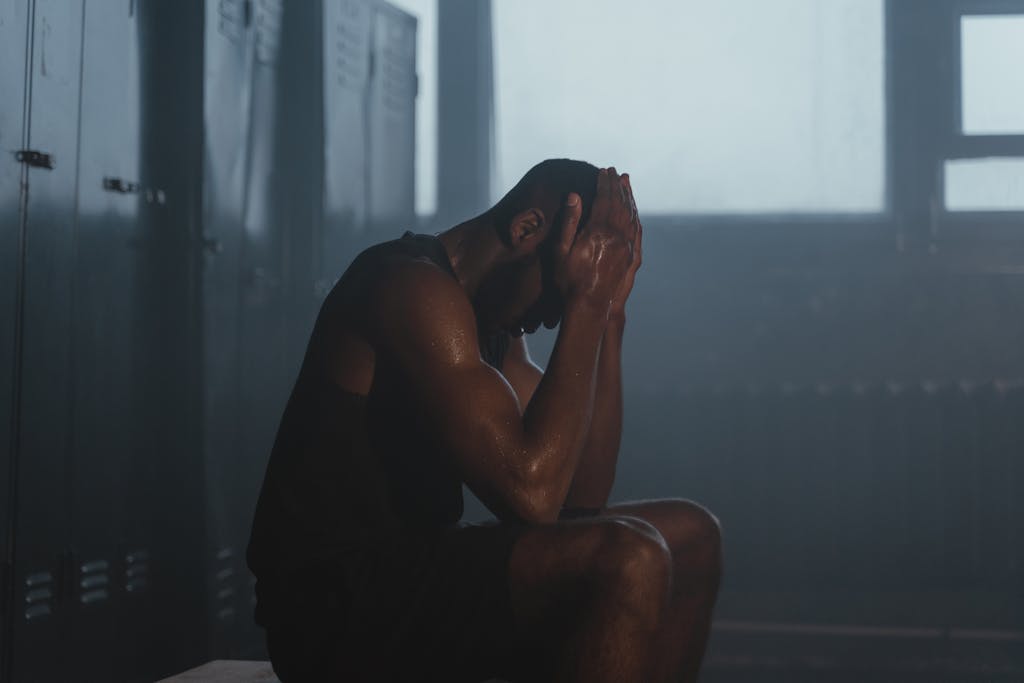
Sports performance anxiety is the pressure, fear, and self-doubt that show up before or during competition and get in the way of performance. It can show up in your body first, like tight chest, shaky legs, fast breathing, and then in your thoughts, like overthinking, fear of mistakes, or expecting the worst.
A little nervous energy can be helpful. But when the nerves start taking over, the body feels tense and the game starts to feel bigger than it really is. That is when athletes begin to lose their natural rhythm.
The important thing to understand is that this does not mean you are weak or unprepared. It usually means your brain is reading the moment as a threat instead of a challenge. That can be trained.
It also helps to realize that sports performance anxiety is not the same as simply caring about the outcome. Most athletes care deeply. The problem starts when that care turns into pressure that blocks execution. Once you understand that difference, you stop treating anxiety like a personal flaw and start treating it like a performance skill you can improve.

1. Build a pre-game routine that calms your mind
A strong pre-game routine gives your brain something familiar to hold onto when nerves start building. It creates structure, and structure helps reduce uncertainty.
Your routine does not need to be complicated. In fact, the simpler it is, the easier it will be to repeat under pressure. A few minutes of movement, breathing, and mental prep can make a huge difference.
For example, your routine could include light stretching, a few deep breaths, one short visualization, and one or two cue words you repeat to yourself. The goal is to tell your mind, “I’ve done this before. I know what comes next”.
When athletes repeat the same pre-game routine often enough, it starts to feel automatic. That automatic feeling is powerful because it gives game day less room to mess with your head.
A good routine also creates consistency. When your warmup, mental prep, and focus cues stay the same, you are not wasting energy deciding what to do next. That energy can go into your performance instead.
2. Use breathing to lower the intensity
When sports performance anxiety shows up, the body usually reacts before the mind catches up. Breathing gets shallow, muscles tighten, and everything starts to feel faster than it should.
That is why breathing is one of the simplest and most effective tools you can use. It helps slow the system down and gives your body a chance to reset before pressure takes over.
One of the easiest methods is this:
- Inhale for 4 counts
- Hold for 2
- Exhale for 6
- Repeat for 5 rounds.
This takes less than two minutes, but it can help you feel more steady before a game, during warmups, or even right after a mistake. For an athlete who feels the nerves rising fast, this kind of reset can be a game changer.
The key is to practice it before game day, not just on the day itself. If you wait until you are already overwhelmed, it is much harder to make it work.
Breathing works best when it becomes a habit. If you do it regularly in training, your body starts to recognize it as a cue to settle down. Then, when the pressure rises, you already have a reliable tool ready to use.
3. Replace panic thoughts with useful self-talk
A lot of sports performance anxiety comes from the way athletes talk to themselves. If your mind keeps saying things like “don’t miss”, “don’t mess up”, or “what if I freeze again”, your brain starts focusing on fear instead of execution.
That is where self-talk comes in. Good self-talk is not fake positivity. It is short, believable, and useful.
Instead of trying to force yourself to “just be confident”, use simple cues like:
- Next play.
- Stay aggressive.
- Breathe and go.
- Trust your work.
- Attack the moment.
These words work because they keep you connected to action. They also help pull your attention away from the spiraling thoughts that often show up with game day pressure.
The best self-talk sounds like something you would actually say to yourself in the middle of a tough moment. If it sounds too forced, it probably will not help when the nerves hit.
Self-talk becomes even more powerful when it matches your personality and your sport. Some athletes need a calm tone. Others need a sharper, more aggressive cue. The goal is not to sound perfect. The goal is to sound believable enough that your brain listens.
4. Practice pressure before the pressure arrives
If you want to improve performance, you need to train for the moments that trigger you. That means not only working on your physical skills, but also putting yourself in situations that feel like game day.
Pressure practice helps your brain get used to hard moments. The more familiar pressure becomes, the less threatening it feels.
You can build this into training in simple ways:
- Shoot free throws after sprints.
- Practice with a score.
- Add a time limit.
- Simulate a last possession.
- Let teammates watch while you perform.
This is especially useful for an athlete who knows they can play well in training but struggles when the moment matters most. Training under pressure gives you proof that you can still perform when things feel uncomfortable.
That proof matters. Confidence is built from repeated experience, not just motivation.
Pressure practice also teaches you that discomfort is not always a warning sign. Sometimes it is just part of performing at a high level. When your body learns that it can handle the uncomfortable moments, sports performance anxiety has less power to control you.
5. Shift from outcome thinking to process thinking
One of the biggest triggers for sports performance anxiety is outcome focus. When you start thinking about winning, losing, impressing people, or not making mistakes, the moment gets heavier than it needs to be.
Process thinking is different. It keeps your attention on what you can actually control.
Instead of saying:
- I have to score.
- I can’t mess this up.
- Everyone is watching me.
Try:
- Read the defense.
- Stay low.
- Move with purpose.
- One possession at a time.
- Execute this play.
That small shift can completely change your mindset on game day. It moves your attention away from fear and back to the job in front of you.
Athletes who stay process-focused usually recover faster after mistakes too, because they are not emotionally stuck on the last play.
Process thinking is one of the most underrated parts of mental training. It sounds simple, but it is often the difference between freezing and staying present. If your mind keeps jumping to the result, bring it back to the next small action in front of you.

6. Visualize the moments that usually stress you out
Visualization is one of the most underrated tools in mental training. But it works best when you use it to rehearse real situations, not just success highlights.
If you always picture yourself making the game-winning shot, but never imagine how you will respond when you miss a shot or feel your nerves spike, then your mind is still unprepared for the hard parts.
Instead, visualize the exact moments that usually trigger your sports performance anxiety:
- walking onto the court,
- stepping to the line,
- hearing the whistle,
- recovering after a mistake,
- staying calm when the crowd gets loud.
Keep it short. Two or three minutes is enough. The goal is not to daydream. The goal is to mentally rehearse your response so the moment feels familiar when it shows up for real.
This is one of the reasons mental training is so important. The mind needs reps too.
The more often you rehearse pressure situations in your head, the less shocking they feel in real life. Visualization is not about fantasy. It is about preparation.
7. Get support if you keep struggling alone
Sometimes sports performance anxiety is not something you can just “think your way out of”. If it keeps showing up every game day, if you freeze even when you know you are prepared, or if your confidence keeps dropping after small mistakes, it may be time to get support.
That is where 1:1 mental training can help.
When you work with me, we look at what is actually happening in your mind before, during, and after competition. We identify your triggers, your thoughts, your pressure points, and the exact habits that are getting in the way of performance.
If you want to work on this more deeply, you can work with me through 1:1 mental training sessions. I help athletes build a better mental system so they can handle pressure, play freer, and trust themselves more on game day.
You do not need to keep fighting this alone. Sometimes the fastest way forward is to train the mind with the same care you already give your body.
Getting support is not a sign that you failed. It is a sign that you are serious about improving. Athletes get stronger by working with coaches, trainers, and specialists in every other area of performance. Your mind deserves that same level of attention.

Key tips
Here are the biggest takeaways to remember:
- Start with one tool, not all seven at once.
- Make your pre-game routine simple and repeatable.
- Use breathing early, before anxiety gets too high.
- Keep self-talk short, believable, and action-based.
- Practice pressure in training so game day feels more familiar.
- Focus on process, not outcome.
- Visualize the moments that usually make you tense.
- Get support if the problem keeps showing up.
The athletes who grow the most are usually the ones who are willing to train what others ignore. If your body is ready but your mind keeps freezing, that does not mean you are broken. It means there is a skill here worth building.
And that skill can be built.
FAQ section
What causes sports performance anxiety?
Sports performance anxiety usually comes from pressure, fear of failure, high expectations, and the stress of being evaluated in front of others. It often gets stronger when an athlete starts thinking too much about the outcome instead of the process.
Is sports performance anxiety normal?
Yes, it is very normal. Most athletes feel some level of nerves before competition. The goal is not to eliminate nerves completely, but to learn how to manage them so they do not interfere with performance.
How do athletes stop freezing on game day?
Athletes stop freezing by building mental habits that help the brain stay calm and focused. Breathing, self-talk, visualization, process focus, and a repeatable pre-game routine can all help reduce the chance of freezing under pressure.
Can mental training really help performance?
Yes. Mental training helps athletes respond better to pressure, stay focused, and recover faster after mistakes. When the mind is trained properly, performance often becomes more stable and more confident.
When should an athlete get help?
An athlete should get help if sports performance anxiety keeps happening often, starts affecting enjoyment of the sport, or causes repeated freezing, avoidance, or loss of confidence. That is especially true if the athlete already knows what to do physically but cannot access it mentally in the moment.
Conclusion
Every athlete feels pressure. What matters is how you respond to it.
If sports performance anxiety has been holding you back, I want you to remember this: you are not the only one, and you are not stuck. With the right tools, the right support, and the right mindset, you can learn to handle nerves without letting them take over.
That is what mental training is really about. Not perfection. Not being emotionless. Just being ready enough to show up, trust your work, and compete the way you know you can.