The Breathing Techniques That Actually Calm Pre-Competition Nerves
You already carry a tool that works faster than any mindset shift and it’s sitting right under your nose.
Your breath is the one part of the fight-or-flight response you can control directly, and controlling it works fast. Techniques built around a long, slow exhale, like the physiological sigh or box breathing, activate your parasympathetic nervous system and measurably lower physiological arousal within seconds to minutes. A Stanford study found this kind of breathing actually outperformed meditation for calming the body down. But breathing isn’t only a “calm down” button. For sports that demand a burst of explosive power, brief, sharper breathing can help you access more activation, not less. The technique that helps isn’t universal, it depends on what the next few seconds are asking of your body.
Introduction
You already know the feeling from the article “What Happens to Your Body and Brain Before Competition”: heart pounding, hands unsteady, a stomach that’s decided this is a bad time to cooperate. Of everything happening in your body in that moment, there’s exactly one part you can reach in and adjust directly, on command, in real time – your breath.
Every other piece of the stress response runs on autopilot. You can’t consciously slow your heart rate or tell your adrenal glands to ease off the adrenaline. But breathing sits in an unusual spot in your nervous system: it happens automatically most of the time, and yet you can override it whenever you choose. That makes it the most practical entry point into your own physiology – a lever you can actually pull, rather than a system you can only hope settles on its own.
This article goes deep on that one lever. Not generic “take a deep breath” advice, but the specific techniques researchers have actually tested, what the evidence says about which ones work fastest, when slowing your breathing down is the wrong move entirely, and how to use the same tools not just before competition, but inside it.
Why Breathing Works Faster Than “Just Calm Down”
Your autonomic nervous system runs on two opposing branches: the sympathetic branch, which drives the fight-or-flight activation you feel before competing, and the parasympathetic branch, which handles rest and recovery. Most of what your body does before a competition – the racing heart, the quickened breathing, the surge of adrenaline – is the sympathetic branch doing its job. You can’t reach in and switch that off directly.
Breathing is the exception. Because your breathing rate has a direct physiological line to your heart rate – a well-documented effect called respiratory sinus arrhythmia, in which your heart rate rises slightly as you inhale and falls as you exhale – deliberately slowing and extending your exhale nudges your whole system toward the parasympathetic side. You’re not trying to think your way out of an activated body. You’re reaching straight into the mechanism that controls it.
This isn’t a fringe idea. A systematic review pulling together the research on voluntary slow breathing, conducted by researchers in a sport performance psychology department, found a consistent pattern across studies: breathing slowly on purpose reliably increases markers of parasympathetic activity, essentially giving you an on-demand way to lean on the branch of your nervous system responsible for calm.
The Physiological Sigh: Your Fastest Reset
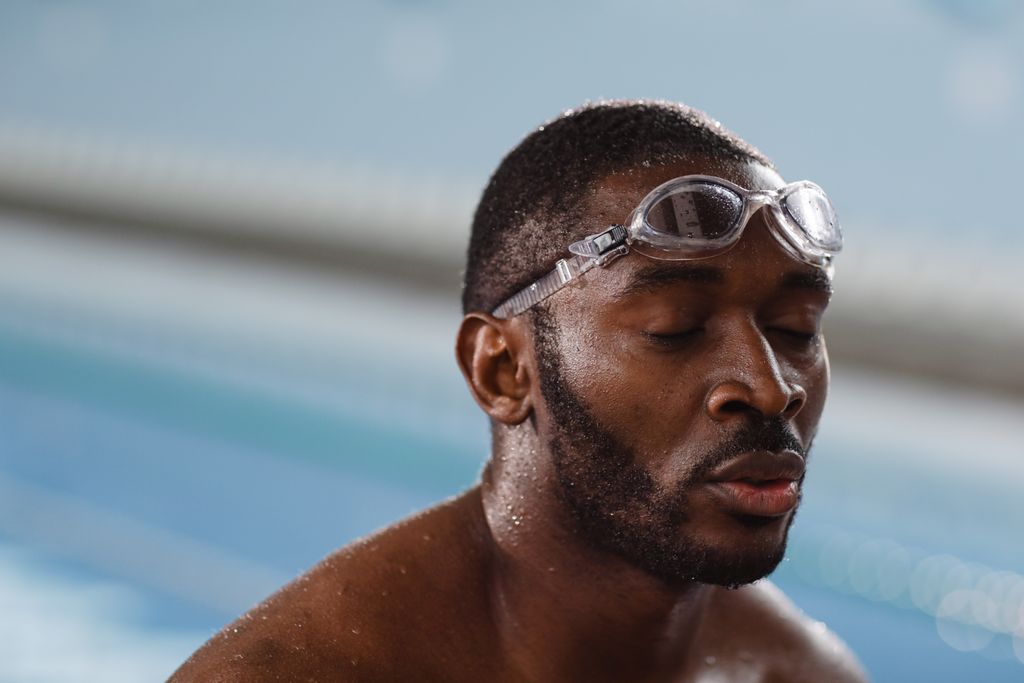
If you only learn one technique, make it this one. In a randomized controlled study, Stanford researchers had participants practice one of several breathing patterns for five minutes a day over a month, then compared the results against a mindfulness meditation group. The technique that came out ahead for lowering physiological arousal and improving mood was what researchers call cyclic sighing – a pattern of two inhales through the nose followed by one long exhale through the mouth.
The mechanism is specific: when you’re stressed, breathing tends to go shallow, and some of the tiny air sacs in your lungs start to collapse – one reason carbon dioxide can build up and intensify that agitated, can’t-catch-your-breath feeling. Taking a second, smaller inhale right on top of the first helps reinflate those collapsed sacs, and the long exhale that follows flushes out the extra carbon dioxide while stretching out the heart-slowing part of your breathing cycle. You can do a full cycle in under 30 seconds: inhale through your nose, take a second, shorter inhale on top of it without exhaling in between, then release it all slowly through your mouth for roughly twice as long as the inhale took.
Box Breathing and the Slow, Steady Alternative
Box breathing – inhaling, holding, exhaling, and holding again, each for an equal count, often four seconds each – is the technique most associated with high-pressure performance environments, and for good reason: it’s simple to learn under stress and gives your mind something structured to focus on besides the moment itself.
Research specifically on athletes backs up a version of this approach. A study of 76 varsity athletes compared diaphragmatic breathing against progressive muscle relaxation and simple paced breathing ahead of a stressful task, and found diaphragmatic breathing produced higher heart rate variability – a marker of a calmer, more adaptable nervous system – than progressive muscle relaxation, along with a bigger boost in how relaxed athletes reported feeling afterward compared to plain paced breathing. The researchers behind that study concluded that slow, deliberate breathing is simple enough to teach that it could realistically become a standard part of how athletes prepare, not just a technique for the anxious few.
Should You Always Slow Down? The Power-Sport Exception
Here’s where most breathing advice oversimplifies. Slow, calming breathwork is excellent when your goal is precision, focus, or bringing an overactivated nervous system back into a workable range – think free throws, a golf putt, a penalty kick. But it isn’t automatically the right call for every sport, or every moment.
A review focused specifically on breathing strategies in sport makes the case that faster, sharper breathing before an effort can actually help when the task ahead calls for a burst of raw power or maximum activation – a sprint start, a heavy lift, an explosive jump. In those contexts, dialing your arousal down might work against you rather than for you. The real skill isn’t “always breathe slowly.” It’s recognizing which state actually serves the specific thing you’re about to do – the calm, focused readiness described as “combat readiness” in the companion piece on pre-competition physiology, or a higher-charge activated state – and choosing your breathing accordingly.
Building Breathing Into Your Actual Routine
None of these techniques work as well the first time you try them in a high-stakes moment as they do once they’re familiar. Practicing a technique daily, even for five minutes, builds the kind of automatic fluency that lets you use it under real pressure without having to think hard about the steps – which matters, because in the moments you need it most, your capacity for careful, deliberate thought is exactly what’s in short supply.
A practical split: use a longer, several-minute breathing practice – cyclic sighing or diaphragmatic breathing – in the hours before competition, when you have time and want your whole system to settle. Save quicker resets, like one or two physiological sighs or a single round of box breathing, for the final minute before you start, when you need something fast that doesn’t require closing your eyes or stepping away from what’s happening around you.
Using Your Breath Mid-Competition, Not Just Before It
Everything so far has focused on the window before competition starts, but the same tool works inside it. Basketball free throws, tennis serves, golf putts, a penalty kick – nearly every sport has built-in pauses where the clock stops for you, even if only for a few seconds. Those pauses are exactly where a single physiological sigh or one round of box breathing earns its keep.
The advantage in these moments isn’t only physiological. A brief, practiced breathing cycle also interrupts whatever thought was running through your head a second earlier – the missed shot, the bad call, the growing scoreline – and replaces it with a fixed, physical action to do instead. That matters on its own: athletes who have something specific and physical to execute under pressure tend to perform more consistently than athletes left to manage the moment through willpower alone.
This is also where the two techniques from earlier split most usefully. A full cyclic-sighing cycle before you step to the line takes about 30 seconds – fine before a free-throw routine, awkward mid-rally in tennis. In faster-paced moments, even one long exhale, without the full technique, still nudges you in the right direction. In-game, the goal was never a perfect reset. It’s a small, repeatable action you can reach for the same way, every time.
Key Tips
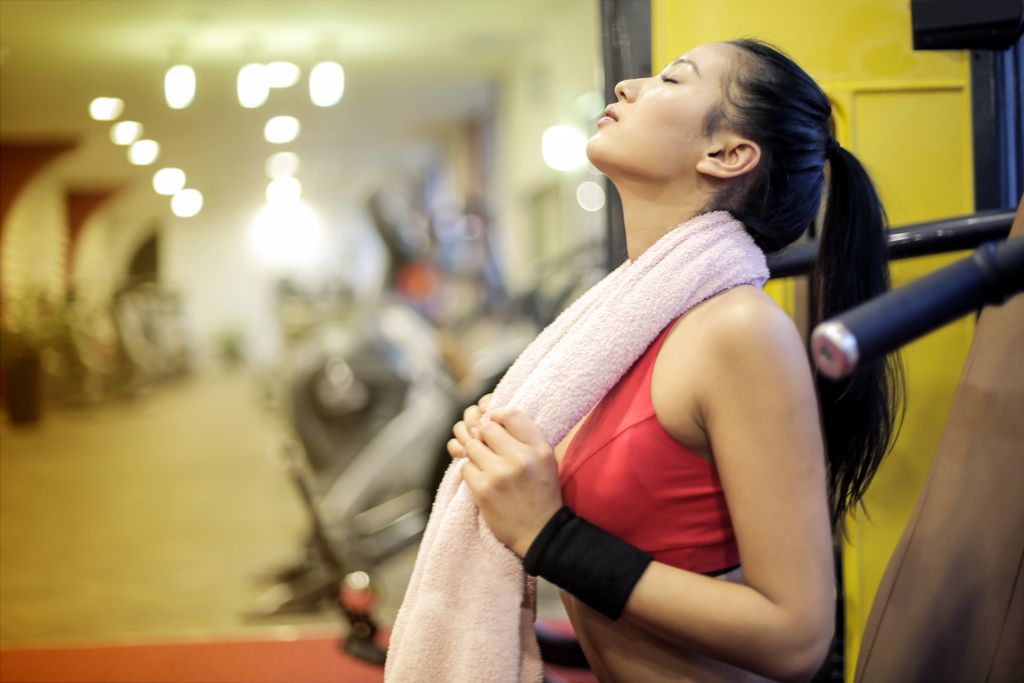
- Learn the physiological sigh first. Two inhales through the nose, one long exhale through the mouth. It’s the fastest-acting technique in the research, and it takes about 30 seconds.
- Practice before you need it. Five minutes a day, away from competition, builds the automatic skill you’ll actually be able to access under pressure.
- Match the technique to the moment. Slow, extended-exhale breathing for focus and precision; brief, sharper breathing when you genuinely need a burst of power.
- Use breathing on the cognitive symptoms too. A racing mind tends to calm alongside a calmed body – a few slow exhales can quiet racing thoughts as much as a racing heart.
- Don’t wait for the start line. Build breathing into the hours before competition, not just the final seconds, so your whole system arrives already closer to where you want it.
- Use the pauses built into your sport. A free throw, a serve toss, a timeout – any natural break is a chance for one long exhale, even mid-competition.
FAQ
How fast does breathing actually work to calm nerves?
Very fast for the physiological sigh specifically. Research participants showed a measurable drop in arousal within about 30 seconds of just one or two cycles.
Is box breathing or the physiological sigh better?
In the Stanford comparison, cyclic sighing outperformed box breathing for daily mood improvement and resting breathing rate, but both work. Box breathing’s steady four-count structure can be easier to lean on in the middle of a stressful moment
Should I always try to breathe slowly before competing?
No. Slow breathing helps when you need calm, focus, or precision. If your event demands a burst of raw power, some faster, sharper breathing beforehand may serve you better than trying to calm all the way down.
Can breathing help with racing thoughts, not just physical symptoms?
Yes. Because the physical and mental sides of pre-competition stress run on the same underlying system, calming your body’s arousal through breathing tends to quiet a racing mind as well.
Do I need to practice breathing techniques, or can I just use them in the moment?
Both work to some degree, but practicing regularly makes a real difference. It turns the technique into something you can execute automatically instead of something you have to think through while already under pressure.
Is there a wrong way to do this?
The main risk is overdoing it. Very rapid or forceful breathing patterns can cause lightheadedness. Start with a few cycles, keep it gentle, and build up rather than pushing hard right away.
Can I use these techniques during competition, not just before it?
Yes – any natural pause, like a free throw, a serve, or a timeout is a good moment for a single long exhale or one physiological sigh cycle. It won’t reset your system the way five full minutes will, but it interrupts the spiral and gives you something concrete to do instead of spiraling further.
Summary
Of everything your body does before competition, your breath is the one lever you can reach and pull yourself. A long, slow exhale – whether through a physiological sigh or box breathing – genuinely calms an overactivated nervous system, often within seconds. But calm isn’t always the goal: some moments call for more activation, not less, and the real skill is matching your breathing to what the moment actually needs. Practiced in advance, it stops being one more thing to remember under pressure and becomes exactly what it should be – something your body already knows how to do.
Sources
- Balban, M. Y., Neri, E., Kogon, M. M., et al. (2023). Brief structured respiration practices enhance mood and reduce physiological arousal. Cell Reports Medicine, 4(1), 100895. https://pubmed.ncbi.nlm.nih.gov/36630953/
- Hunt, M. G., Rushton, J., Shenberger, E., Murayama, S. (2022). Positive Effects of Diaphragmatic Breathing on Physiological Stress Reactivity in Varsity Athletes. Journal of Clinical Sport Psychology. https://journals.humankinetics.com/view/journals/jcsp/12/1/article-p27.xml
- Migliaccio, G. M., Russo, L., Maric, M., Padulo, J. (2023). Sports Performance and Breathing Rate: What Is the Connection? A Narrative Review on Breathing Strategies. Sports (MDPI). https://www.mdpi.com/2075-4663/11/5/103
- Laborde, S., et al. (2022). Effects of voluntary slow breathing on heart rate and heart rate variability: A systematic review and meta-analysis. PubMed. https://pubmed.ncbi.nlm.nih.gov/35623448/
- The Physiological Sigh: A 30-Second Breathing Technique That Actually Works. (2026). Simply Psychology. https://www.simplypsychology.com/articles/physiological-sigh-breathwork
- Bergland, C. (2023). How Longer Exhalations and Cyclic Sighing Make Us Feel Good. Psychology Today — The Athlete’s Way. https://www.psychologytoday.com/us/blog/the-athletes-way/202301/how-longer-exhalations-and-cyclic-sighing-make-us-feel-good